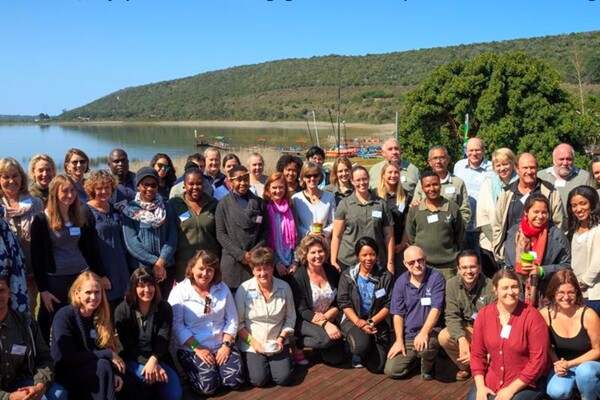
The Garden Route Interface and Networking (GRIN) Meeting is an annual event taking place in the Garden Route of South Africa, providing a forum for researchers and practitioners (from anywhere in the world) interested in better understanding and managing (or navigating) social-ecological systems and their complex interactions and feedbacks. Three types of interfaces are of particular interest to GRIN deliberations: human-nature (social-ecological systems), theory-practice (scientists and managers), and social-natural (sciences).
Both managers and scientists are invited to share their latest approaches, challenges, insights and findings. We encourage all contributions to be grounded in practical real-world management, e.g. by including a final slide that explains the relevance of the findings/concepts to management. GRIN meetings provide for four types of contributions:
1. 20 – 30 minute keynote and/or synthesis presentations (invited or selected from abstracts received)
2. 15 minute presentations
3. 5 minute speed talks
4. Posters: A1 size (59.4 x 84.1 cm) in either portrait or landscape orientation.
Abstracts should be emailed to Nerina Kruger (nerina.kruger@sanparks.org) by 8 May 2026.
Topics and session themes vary somewhat from year to year, based on the interest and expertise of the participating community, but adhering to an overall focus on social-ecological systems. Themes that have proven popular to date include:
- Facilitating knowledge exchange at the science, policy and practice interfaces;
- Human–nature connections (benefits and conflicts) and their implications for sustainability;
- The evolving role of conservation systems, from protected areas to multi-use landscapes;
- Equity, justice, and inclusivity in conservation systems;
- Environmental governance and stewardship in the Anthropocene;
- Lessons from co-learning initiatives, engagement forums, and multi-stakeholder collaborations;
- Responding to climate change and other drivers of environmental change;
- Monitoring and evaluation approaches for social-ecological systems;
- Innovative methods / approaches for studying social-ecological systems.
For more information: https://www.sanparks.org/conservation/scientific-services/events/grin-2026