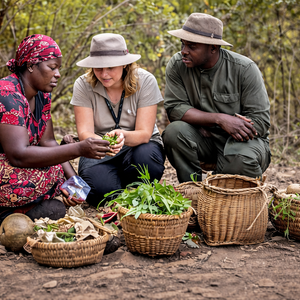
In theme 3, we aim to address the critical need to understand and develop institutional arrangements and inclusive governance systems, and explore the conditions that can promote the resilience of Social-Ecological Systems and adaptive capacities, in a truly transformative way.
In the next five years, we will have a more intense focus on adaptative collaborative governance, based on participation and authentic engagement, building trust and shared understanding. We want to promote inclusivity and equity in designing management actions and the governance of systems, with a focus on conservation and socially sensitive social-ecological systems. We want to make the formal link between these collaborative platforms of governance and the actual ability to manage adaptively, as well as the true promotion of the adaptive capacity of the social-ecological system. Within this framework, scientists from academic or conservation institutions can be seen as agents within the system and can position themselves as boundary “persons” for catalysing transformation.
Another key to strengthen adaptive capacity and resilience, or even transformative change, is to better understand how Adaptive Governance (Folke et al. 2005, Armitage et al. 2012, Chaffin et al. 2014) and Network Governance (Provan and Kenis 2008, Scarlett et al. 2016) may act synergistically to ensure pluralism and polycentricity that will foster biosphere-based sustainability for the Anthropocene and promote adaptive management. Adaptive management is a systematic approach for linking learning with implementation to facilitate ongoing improvement in natural resource management. However, the social dimensions of the learning that takes place in adaptive management have received scant attention in the literature.